Friday, November 24, 2006

Leithart on Radical Orthodoxy
Still processing the conference:

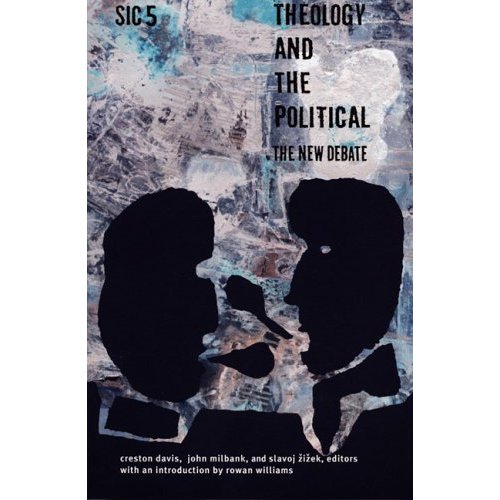
On Monday afternoon, I sat in on the crowded session reviewing a book entitled Theology and the Political: The New Debate. Basically, it seems to be a treatment of various issues in relationship between theology, Continential philosophy, and the political, associated with a theological movement known as "Radical Orthodoxy". The main figure behind this approach is Prof. John Milbank. If you're interested, see also this assessment in "First Things".

Until quite recently, I've not read much in this area, so it was excellent to hear from such important participants as Graham Ward and Conor Cunningham, who quite rightly reoriented the discussion away from Ontology per se and towards Christology and particularly, the Incarnation. Just before this session, at a previous session, I had the privilege of briefly meeting Prof. Peter Leithart. I think he was quite intrigued to hear that many of his books are being read by capital "O" Orthodox Christians. Leithart had this and this to say about these takes on "Radical Orthodoxy."

Labels:

Wednesday, August 23, 2006

Evangelical Theology: Witherington Digs Chrysostom

This post is not about the classic book "Evangelical Theology" by Karl Barth (which I wholeheartedly endorse), but rather an interesting interview I came across with the Methodist Biblical scholar Ben Witherington III. Isn't that a great name? Anyway, I quite respect Witherington's scholarship, and he lays it out pretty clearly. If you're at all interested in the relationship of exegesis to dogma, go check it out.

Here's a little snippet:

CT: Naturally, you argue that this requires a fresh approach to reading and interpreting the Bible. Who are some pre-Enlightenment interpreters of the Bible who are models of good exegesis for us today?


Witherington: Some of the Antiochian fathers would be good—Gregory of Nyssa and Gregory Nazianzus, for example. But if there's one person who seems to be in touch with the original Greek and rhetorical ethos of the New Testament and especially Paul, that would be John Chrysostom.

I'm thankful that we've got some wonderful new studies on Chrysostom as an exegete and a theologian (like Margaret Mitchell's The Heavenly Trumpet, which helps us appreciate his numerous homilies on the New Testament). In contrast to the Latin Fathers, like Augustine, he is very much in touch with the living language of the Greek text. He is able to resonate with it, to pick up the rhetorical signals, the cultural signals, and understand the trajectory of the theology and ethics being taught.

Labels: ,